If you have installed solar panels on your roof, on your shed, in your garden or wherever you can find space, you may have generated a lot of electricity over the last few hot months of the sun-filled Summer. This is very exciting, and a great step towards reducing your energy bills. How, then, are you going to use up all that electricity, much of it generated during the day whilst you may be out at work or enjoying a day trip? By the evening, when you need extra light and feel like watching a film or listening to your favourite radio show, the sunlight has gone along with the electricity. This means that you must pay for your electricity according to whatever tariff you are on.
This is where battery storage comes in.
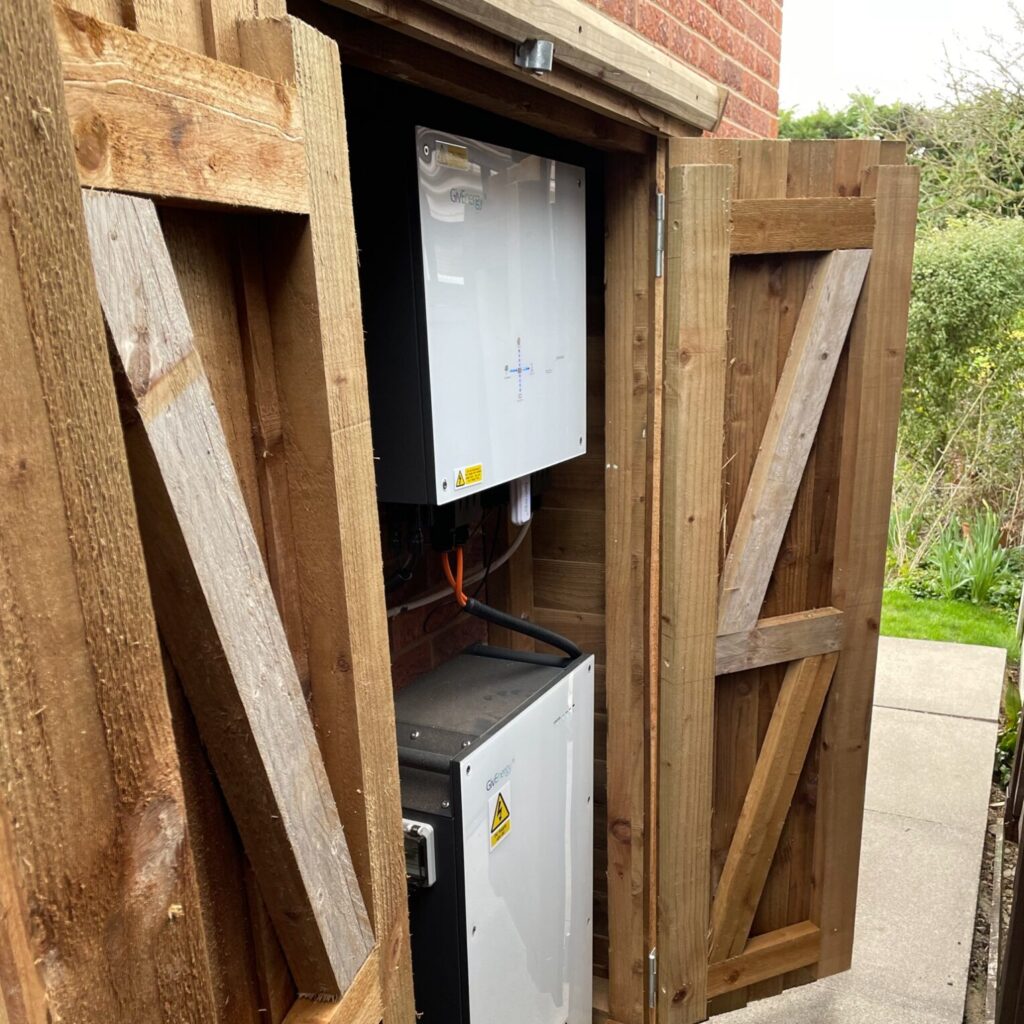
When your panels harness the power of the sun to create electrical energy, anything you are not using will be taken up by your battery. The battery stores the energy for you to use later, after the sun has gone in the evening or when the weather is cloudy with little electricity being generated.
What happens if I don’t use all the electricity stored in my battery?
Inevitably, there may be times when you don’t use all the energy generated. Malvern Solar will make sure that the National grid knows about your installation of panels and battery storage. We will apply for a special new connection for you, with a new MPAN number (the 13-digit number associated with your residence which is found on your energy bill). This will allow you to sell back some of the energy you produce to the National energy network. This will be deducted from your electricity bill.
Tariffs explained
When you have installed solar panels and battery storage, it is important to think about which is the best energy provider for your needs. Many providers have a bewildering range of tariffs to choose from and getting the right one can make a huge difference.
The right tariff varies from customer to customer as well as changing with the time of year. Some people review their provider and tariff seasonally. Generally, a flexible tariff is a good idea, allowing you to save money by using energy at times convenient to you. An example of this is a low night-time tariff, where the cost of using energy to the customer is lower during the night, making it an ideal time to charge your electric vehicle if you have one, or to use your washing machine or dish washer. This concept is familiar to many, being similar to the idea of night storage heaters which were popular in the 1980s.
There are some helpful videos on YouTube led by people who keep abreast of new developments and good deals, such as ‘Gary does Solar’. Watching one or two of these can help to work out the best solution for you, although it is essential to remember that some are sponsored by or work for a specific energy company. There are also comparison sites on the web. Many of our customers use Octopus, one of the most popular providers. They provide a range of tariffs to suit customers.
What size of battery do I need?
This will depend largely on the size of your solar array and the size of your property. It is not simply a case of ‘the bigger the better’. This is because of the relationship between the size of your solar array, the amount of energy likely to be produced, how much energy you need to use in your household, and the limit set by the National grid on how much energy you can export back to the grid. The larger the battery storage solution, the greater the cost. With some systems it is possible to add more storage capacity later. This can reduce the initial cost as well as allowing flexibility.
Where do I start?
Why not get in touch with us at Malvern Solar? We often install a battery for those with a pre-existing solar array or can design a whole system for you. Our advice and quotations come free of charge.